


Latitudes of Embodied Knowledge
Spatial Morphology and Decolonial Encounter at Kiasma
While the decolonial turn in museum studies has focused primarily on curatorial practice, less attention has been paid to the role of architectural space in shaping such encounters. This paper examines how museum architecture can prepare visitors for a dialogic encounter with Indigenous knowledge through spatial organisation. Using the third floor of Kiasma Museum of Contemporary Art in Helsinki as a case study, the research investigates the spatial transition between the labyrinthine Kokoelmat Galleries and the open Rauha gallery. Drawing on affordance theory, embodied cognition, and isovist analysis, it develops the concept of spatial latitude to describe measurable configurational ranges that afford different modes of embodied and epistemic engagement. The findings identify three interrelated latitudes—embodied, epistemological, and political—which structure the visitor's movement from directed circulation toward open gathering and dialogue. The study argues that museum space is not a neutral container of meaning but an active participant in the production of knowledge, demonstrating how architectural configuration can support decolonial curatorial aims by shaping the conditions under which knowledge is encountered.
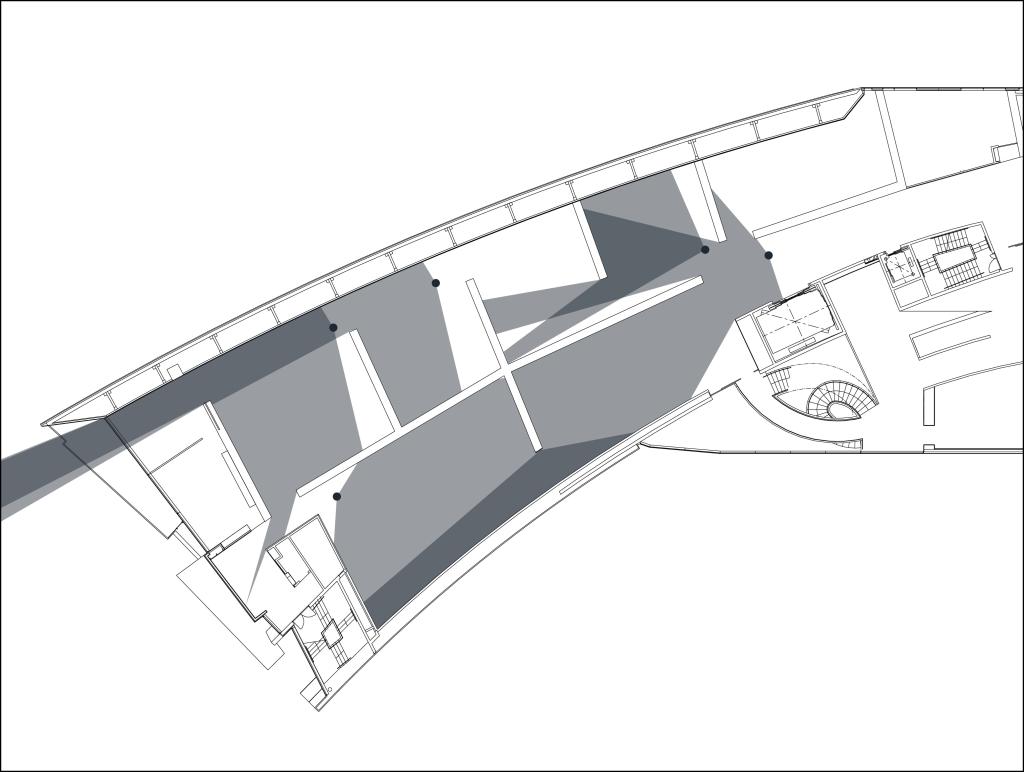

Visitors encounter museums through movement, as galleries, routes, and levels become visible and accessible from successive bodily positions. Yet, stair approaches, landings, balconies, and…
While the decolonial turn in museum studies has focused primarily on curatorial practice, less attention has been paid to the role of architectural space in shaping such encounters. This paper…
Museum architecture shapes how knowledge is encountered. This article develops the concept of epistemological decentralisation to describe spatial configurations that resist privileging a single…