
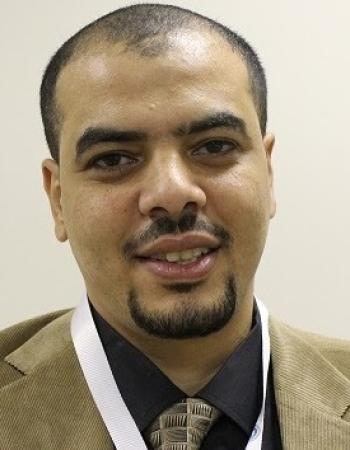
نبذة تعريفية / مختصر السيرة الذاتية
AMR TOLBA received the M.Sc. and Ph.D. degrees from the Mathematics and Computer Science Department, Faculty of Science, Menoufia University, Egypt, in 2002 and 2006, respectively. He is currently a full professor of computer science at King Saud University (KSU), Saudi Arabia. He has authored/coauthored over 300 scientific papers in top-ranked (ISI) international journals (such as Artificial Intelligence Review, IEEE IoT, ACM TOIT, IEEE CEMAG, IEEE ACCESS, IEEE SYSTEMS, FGCS, JNCA, NC&A, JAIHC, COMNET, COMCOM, P2PNET, VCOM, WWWJ,... etc.). Prof. Tolba served as a technical program committee (TPC) member at several conferences (Such as IoTCCT 2025, EAI MobiHealth 2025, SCAI 2024, MLISE 2024, SAI 2024, MLKE2023, DSIT 2022, CICA2022, EAI MobiHealth 2021, DSS 2021, AEMCSE 2021, ICBDM 2021, ICISE 2021, DSS 2020, NCO 2020, ICISE2019, ICCSEA 2019, DSS 2019, FCES 19, ICISE 2018, ESG’18, Smart Data’17, NECO 2017, NC’17, WEMNET’17, NET’17, Smart Data’16, ...). He has been included in the list of the top 2% of influential researchers globally (prepared by scientists from Stanford University, USA) during the calendar years 2020, 2021, 2022, 2023, 2024 and 2025 respectively (Single and Career Long Lists). Prof. Tolba served as Associate Editor/Guest Editor for several ISI journals. He has translated four books into the Arabic language. His work has been recognized across various platforms, with an H-index of 43 in Scopus, 54 in Google Scholar, and 38 in Web of Science. Prof. Tolba is a Senior Member of IEEE

مجالات الخبره
My expertise encompasses the strategic design and implementation of Applied AI Systems Engineering, specializing in architecting scalable, secure machine learning models and deep learning frameworks. I excel in developing distributed intelligent algorithms and smart IoT ecosystems, with a core focus on Cybersecurity—specifically in building resilient, secure data management architectures and defending against sophisticated network threats. My proficiency extends to Ubiquitous Computing, where I design context-aware mobile software and pervasive computing solutions. By bridging the gap between large-scale data analytics pipelines and robust security protocols, I ensure that intelligent systems are not only high-performing and scalable but also hardened against evolving digital vulnerabilities.
المنشورات
المزيد ...

المواد الدراسية
المزيد ...

The course exposes the students to topics related to cybersecurity, cyberspace operations, cyberwarfare, and electronic warfare. This includes cybersecurity, cyber risks, risk treatment options,…
The primary goal of this course is to address specific needs in computer sciences, such as emerging advancements in the field or specialized topics relevant to the job market
The course is designed to provide Basic knowledge of Python. Python programming is intended for software engineers, system analysts, program managers and user support personnel who wish to learn…