
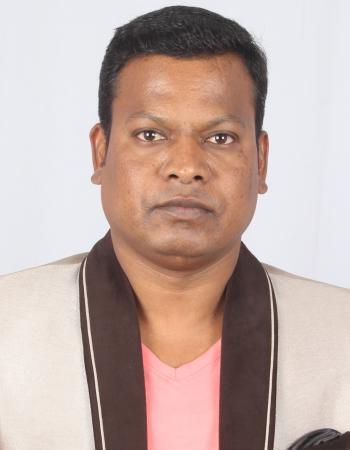

introduction/brief CV
Dr. Ramachandran Samivel completed his Doctor of Philosophy (PhD) in Biochemistry, with a focus on Radiotherapy and UV Photoprotection in Human Cells and Rodents, from Annamalai University, Tamil Nadu, India (2008–2012). Following his doctoral training, he pursued postdoctoral research (2012–2015) at Dankook University, College of Medicine, and the CHA Stem Cell Laboratory, South Korea, specializing in otorhinolaryngology and stem cell biology.
Between 2015 and 2018, Dr. Samivel completed additional postdoctoral fellowships at the Translational Research Platform for Veterinary and Biological Sciences (TRPVB), Tamil Nadu Veterinary and Animal Sciences University (TANUVAS), India, and at Tulane University School of Medicine, New Orleans, USA, where his work emphasized translational and biomedical research.
He is currently serving as an Assistant Professor in the Department of Optometry, College of Applied Medical Sciences, King Saud University, Saudi Arabia. Dr. Samivel has authored over 40 publications in reputable peer-reviewed international journals and actively contributes to the scientific community as an editor and reviewer for several high-impact international journals. His research interests span cellular photoprotection, stem cell biology, ocular surface disorders, fibrosis, cardiovascular & kidney disease, and translational biomedical sciences.
Research Scholar ID:https://scholar.google.com/citations?user=jxAefIYAAAAJ&hl=en&oi=ao
Scopus ID: https://www.scopus.com/authid/detail.uri?authorId=23986387500
Orcid ID: https://orcid.org/0000-0001-8301-8625
Web of Science ID: GYQ-7879-2022
publications
see all

This study evaluated the antimicrobial and antibiofilm effects of bovine serum albumin–gold nanoclusters (BSA–GNCs) against planktonic and antibiotic-resistant bacteria.
Background/Objectives: Non-invasive central nervous system (CNS) therapies are limited by complex mechanisms and the blood–brain barrier, but nasal delivery offers a promising alternative.
Corneal injury requires both epithelial regeneration and stromal repair, and formulated biomaterials established for repairing damaged corneas can be utilized in regenerative medicine.
office hours
| Saturday | Sunday | Monday | Tuesday | Wednesday | Thursday | Friday | |
|---|---|---|---|---|---|---|---|
| from | _ | 08:00 AM | 08:00 AM | 08:00 AM | 08:00 AM | 08:00 AM | _ |
| to | _ | 04:00 PM | 04:00 PM | 04:00 PM | 04:00 PM | 04:00 PM | _ |
| location | _ | Cornea Research Lab Cornea Research Lab | Cornea Research Lab Cornea Research Lab | Cornea Research Lab Cornea Research Lab | Cornea Research Lab Cornea Research Lab | Cornea Research Lab Cornea Research Lab | _ |