

Dr. Mona Ghazi Alharbi
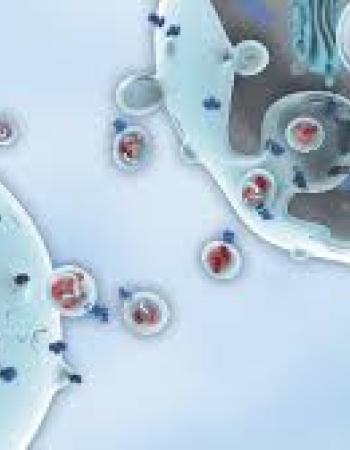
My Ph.D. project focused on the potential use of exosomes as a prognostic/chemoresistant biomarkers for ovarian cancer. Resistance to chemotherapy treatment is one of the issues facing ovarian cancer patients, leading to poor prognosis and low patient survival rates. However, prognostic biomarkers might aid in personalized individual treatment, which may impact clinical decisions and improved outcomes. Cancer cells release messages packaged inside small membrane-bound vesicles called exosomes, and these packed molecules are highly selective. Exosomes might provide the opportunity to track them in biological fluids to potentially determine patient response to chemotherapy drugs. Interestingly, specific tumour characteristics are reflected in exosomes secreted from tumour cells, making them an attractive source for minimally invasive biomarkers without the need for invasive tumour biopsies.
I love being a scientist because it allows me to look closely at something I am interested in. Moreover, the research outcomes on exosomes might give the public new knowledge and hopefully bring us closer to better cancer patients' treatments. I am interested in finding out how we can diagnose cancers at early stages and overcome chemoresistance by finding a potential therapeutic target in cancers to enhance the efficacy of treatment. I am strongly focused on implementing my Ph.D. findings in clinical practice to improve cancer diagnosis and patients’ responses to chemotherapy. I believe that my innovative research in cancer can pave the way for new approaches to treatment. In the future, this transference of knowledge from the laboratory benchtop to the patient’s bedside may save more precious lives.
|
EDUCATION |
||
|
Degrees |
|
|
|
Bachelor degree |
2004-2008 |
Bachelor of Biochemistry, King Saud University, Riyadh, Saudi Arabia
|
|
Master (MSc) |
2013-2015 |
Master of Biotechnology, University of Queensland, Brisbane, Australia Thesis title “The effect of magnesium on the filaggrin expression as signal for the apoptosis and the involvement of langerhans cells and pro-inflammatory cytokines in epidermis of human skin.”
|
|
PhD |
2016-2020 |
Exosomes Biology laboratory, Oncology, Collage of Medicine, University of Queensland, Brisbane, Australia Thesis title “New Strategies for Identification of Therapeutic Target of Ovarian Cancer”
|
|
Work Experience
|
|
|
|
Research assistance |
2008-2009 |
King Khalid Hospital and Research Centre (Stem Cell Unit)
|
|
Demonstrator |
2009-2020 |
Biochemistry department, King Saud University, Riyadh, Saudi Arabia |
|
|
|
|
Assistant Professor Dec. 2020- Biochemistry department, King Saud University,
to date Riyadh, Saudi Arabia
AWARDS
|
2023
|
Dean’s Award for Outstanding Higher Degree by Research These 2020, Faculty of Medicine, University of Queensland, Australia
|
|
2020
|
Academic Excellence Award, Saudi Cultural Mission, Canberra, Australia |
|
2019
|
TAS2019 Poster Award, 6th Thomas Ashworth CTC & Liquid Biopsy Symposium, Sydney, Australia
|
|
2019 |
July Publication of the Month winner, University of Queensland Centre for Clinical Research, Faculty of Medicine, University of Queensland
|
|
2019 |
Internship at Department of Physiology, Anatomy and Genetics, University of Oxford
|
|
2019 |
International Travel Award, University of Queensland, Brisbane, Australia.
|
|
2018 |
The Best Poster Award at the 2018 Australasian Extracellular Vesicles Conference, University of Technology Sydney (UTS), Sydney, Australia.
|
|
2018 |
Academic Excellence Award, Saudi Cultural Mission, Canberra, Australia.
|
|
2017 |
Domestic travel award, University of Queensland, Brisbane, Australia.
|
|
2017 |
Travel Award from the 65th Annual Meeting of the Society for Reproductive Investigation, 2018, San Diego, USA
|
|
2017 |
Academic Excellence Award, Saudi Cultural Mission, Canberra, Australia. |